
Bulk Voice SMS And Voice Broadcasting
In the introduction section, we will explore the concept of Bulk Voice SMS and Voice Broadcasting in depth.
We will define Bulk Voice SMS as a technology that enables the automated delivery of pre-recorded voice messages to a targeted audience.

Whereas Voice Broadcasting involves delivering a single phone message to multiple recipients.
We will discuss the significance of choosing the right option to maximize the impact of the communication strategy, covering aspects such as audience targeting, message customization, and cost-effectiveness.
Understanding Bulk Voice SMS
Bulk Voice SMS is a communication tool that enables businesses to send pre-recorded voice messages to a large audience simultaneously.
It offers a convenient way to convey information, alerts, promotions, and reminders to customers and prospects.
The key features of Bulk Voice SMS include the ability to use pre-recorded messages, conversion of text to speech, and the option to schedule message deliveries at optimal times for the target audience.

One of the main advantages of using Bulk Voice SMS is its cost-effectiveness, as it allows businesses to reach a large number of recipients at a relatively low cost per contact.
Additionally, it offers high reach, as the messages can be sent to both mobile and landline numbers, ensuring broader coverage.
Another benefit is the immediate delivery of messages, which enables timely communication with the recipients.
Understanding Voice Broadcasting
Voice Broadcasting is a powerful communication tool that allows for the automated delivery of personalized messages to a large audience.
This technology is widely used in various industries for a range of purposes, including marketing, notifications, reminders, and surveys.
Voice Broadcasting allows for simultaneous outbound calls to multiple recipients, maximizing the efficiency of the communication process.
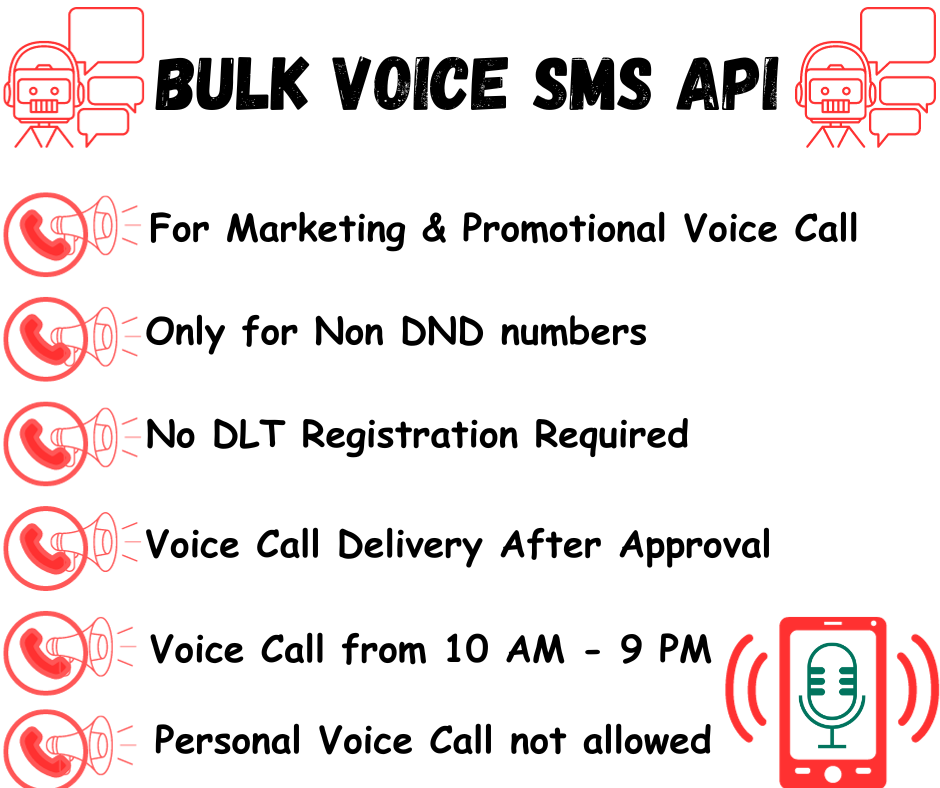
Users have the flexibility to either broadcast a live message or pre-recorded message based on their specific needs and preferences.
Voice Broadcasting can include interactive features that allow recipients to interact with the system by responding to prompts and navigating through menus.
Best Practices for Effective Voice Communication
Here’s a more detailed version of the best practices for effective voice communication:
1. Keep messages concise and clear
Focus on delivering your message clearly and concisely to maintain the listener’s attention. Avoid background music and noise. Don’t make it look fancy.
2. Use a professional voice or high-quality text-to-speech
Whether speaking live or using text-to-speech technology, it’s important to ensure that the voice is clear, professional, and easily understandable.
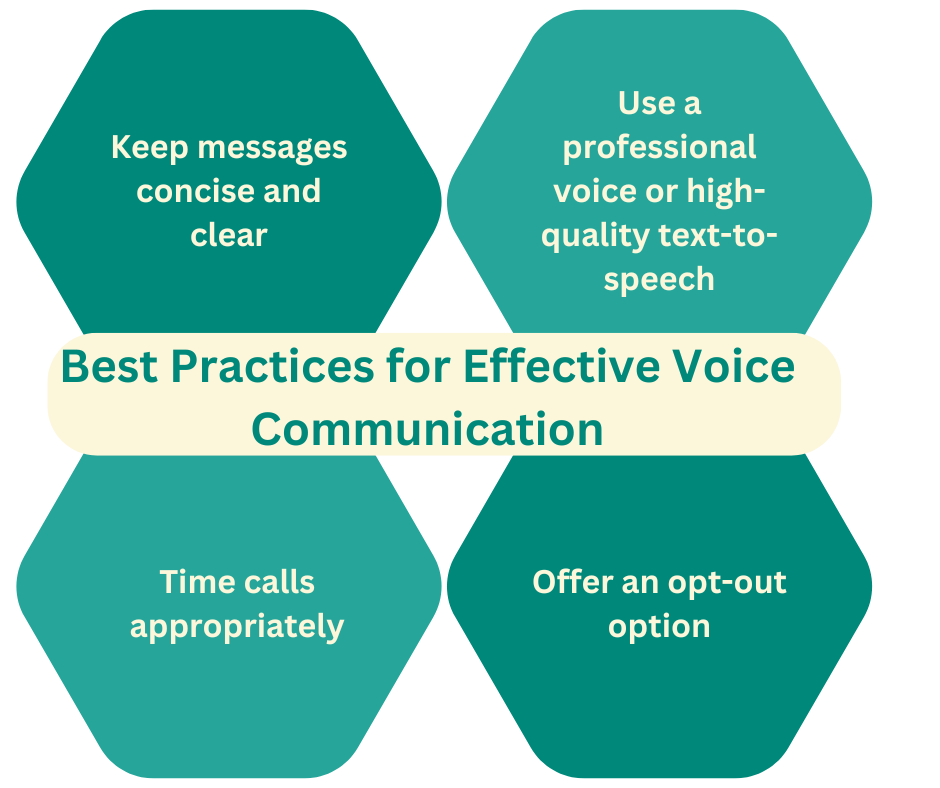
3. Offer an opt-out option
Respect the listener’s autonomy by providing an option to opt out of receiving further voice communications if they prefer.
4. Time calls appropriately
Be mindful of the recipient’s time zone when scheduling voice calls to ensure that they are not inconvenienced by untimely communication.