
Overcoming Challenges In The Bulk SMS Industry
In today’s dynamic marketing landscape, the bulk SMS industry is crucial in reaching and engaging with a wide audience.

With its ability to deliver targeted and personalized messages, bulk SMS has become integral to marketing strategies for businesses across various industries.
From promoting products and services to delivering time-sensitive information, the significance of bulk SMS in modern marketing cannot be overstated.
Challenges in the Bulk SMS Industry
The challenges in the bulk SMS industry that may hinder your growth are as follows:
Regulatory restrictions and compliance issues
Navigating different regulations and ensuring compliance with privacy laws can be complex and challenging for businesses in the bulk SMS industry.
Deliverability and reach
Ensuring that messages are delivered to recipients and reaching the intended target audience can be a hurdle, especially with network issues and spam filters.
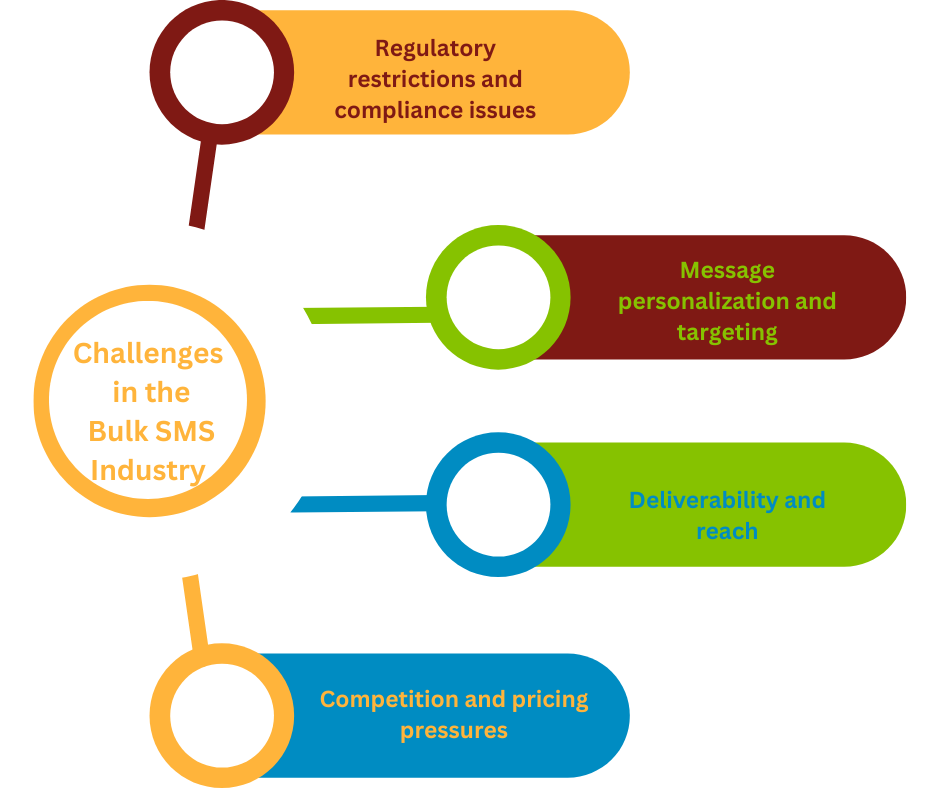
Message personalization and targeting
Customizing messages to be more relevant to individual recipients and effectively targeting specific demographics can be demanding in the bulk SMS industry.
Competition and pricing pressures
Dealing with a competitive market and managing pricing to stay competitive while maintaining profitability can be a constant challenge for businesses in the bulk SMS industry.
Addressing Technical Challenges
As platforms continue to expand, we need to address several technical challenges to ensure the smooth operation and growth of our systems. These challenges can be categorized as follows:
Scalability and Infrastructure
Ensuring that our systems are designed to scale seamlessly to accommodate increased user activity and data volume without compromising performance.
Continuously assessing our infrastructure to identify areas for improvement and upgrading hardware and network resources to meet the growing demands of our platform.
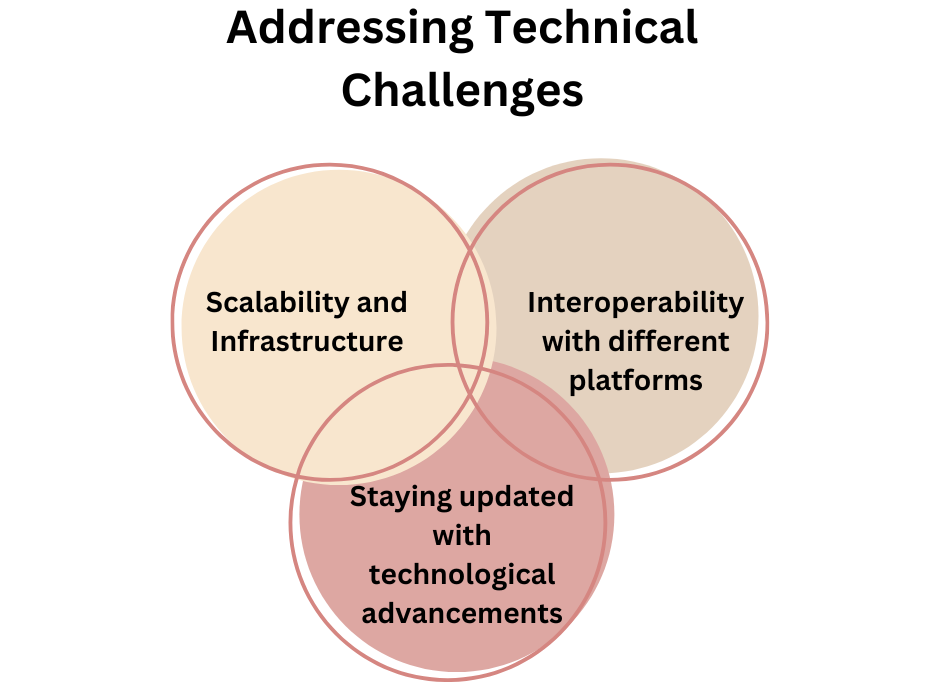
Interoperability with different platforms
Creating robust and well-documented APIs and modular interfaces that enable easy integration with third-party systems and services.
Ensuring that our platform is compatible with a wide range of operating systems, web browsers, and devices.
Staying updated with technological advancements
Proactively researching and evaluating emerging technologies and frameworks to identify opportunities for enhancing the functionality and performance of our platform.
Implementing simple software development practices, continuous integration, and automated deployment pipelines to ensure that our technical stack remains current, secure, and efficient.
Navigating Competition in the Industry
To effectively navigate competition in the industry, it is crucial to focus on a few key strategies:
Differentiation through personalized services
Tailoring services to meet the specific needs and preferences of individual customers can set a business apart from its competitors. This could include personalized recommendations, customized products, or tailored communication.
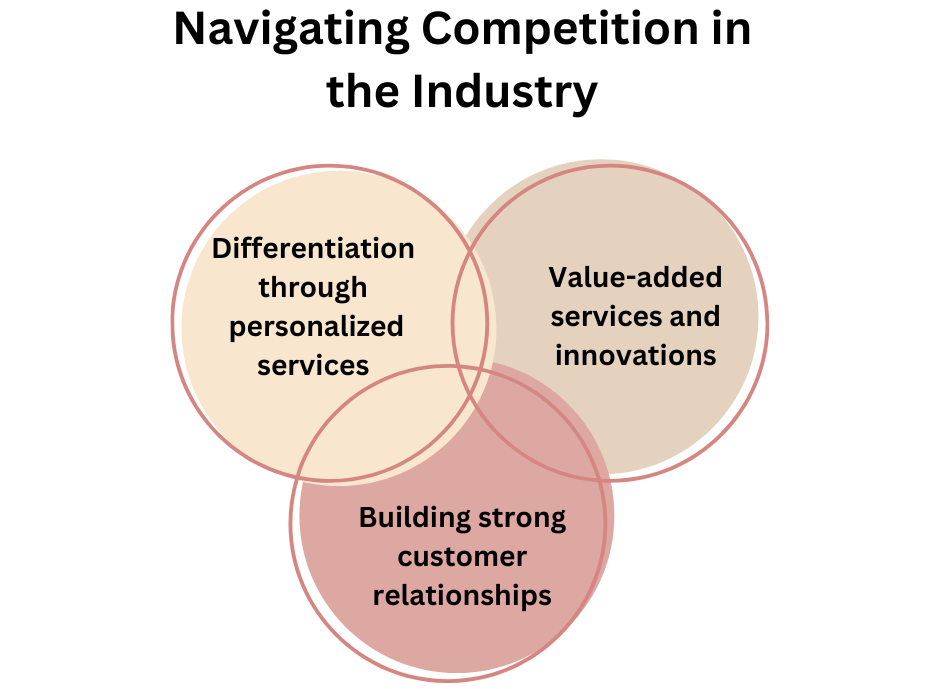
Value-added services and innovations
Offering additional services that go beyond the basic offering can enhance the overall customer experience and create added value.
This could involve incorporating cutting-edge technologies, introducing unique features, or implementing innovative solutions to improve the customer journey.
Building strong customer relationships
Developing and maintaining strong connections with customers can be a powerful differentiator.
This can be achieved through personalized communication, superior customer service, and a focus on long-term customer satisfaction and loyalty.