
What is the difference between WhatsApp Utility and Authentication messages?
Overview
Often times it is misunderstood that Utility messages and Authentication messages are same and because of this people do mistakenly wrongly categorize between Utility and Authentication templates which ultimately leads to issues in message template.
Even tough both are non promotional templates in nature they still are used for different purposes and with proper understanding only there are chances for template approval, better delivery performance etc.
In this article, we are going to explore how Utility and Authentication differ, when to use what and common mistakes to be avoided.
Definitions
Utility Messages
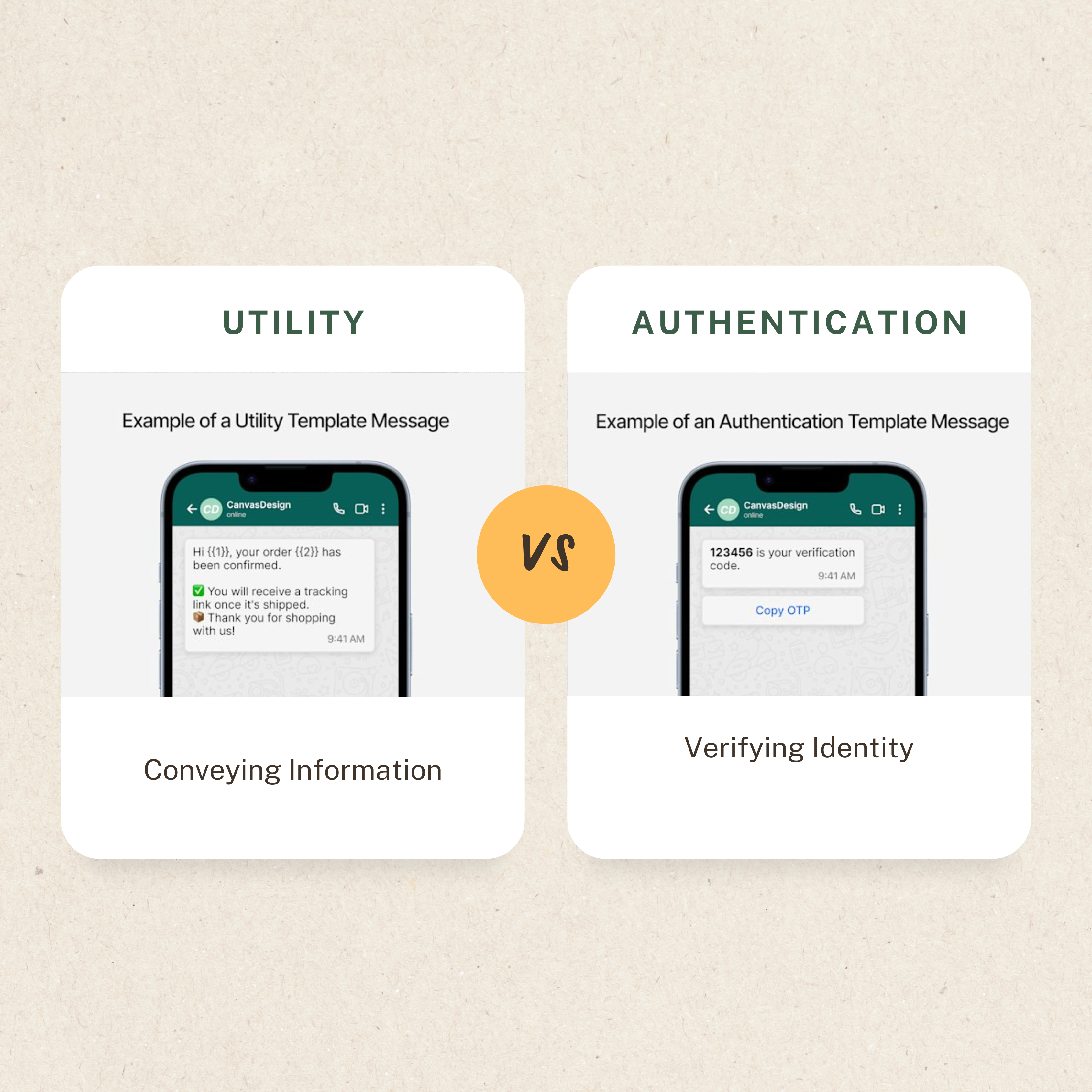
Utility messages are transactional or service related messages sent to the user for conveying important information such as order confirmations, reminders, account alerts, etc. In simple words, it is used to inform the user about a transaction or service.
- Used mainly for transaction updates.
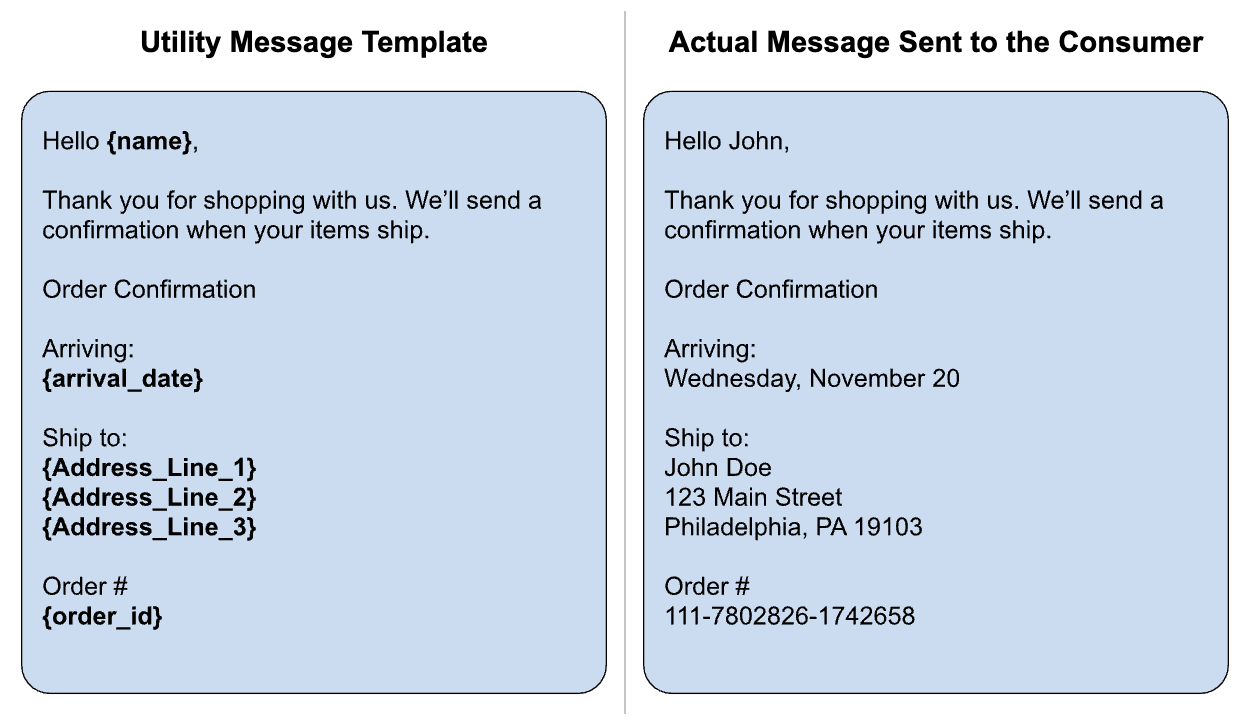
- You can include multiple variables (id, name, date) and URL (website link, WhatsApp group link).
- Provides facility to add headers and buttons in the template. For e.g. “Call Now!, Book Now!, etc.”
- We can convey messages regarding order updates, booking details, account info, etc.
- Messages excluding promotional
Authentication Messages
Authentication messages are security oriented messages used to deliver OTPs or verification codes for verifying identity during sensitive actions. In simple words, it is used to verify user’s identity for security purpose.
- Used mainly for security and identity verification.
- Only OTPs and verification codes will be approved in this template.
- Button like “Copy Code” is available in this template.
- In Authentication template, we can add expiry tags in the message which means message will get expired after a certain period of time.
Comparison
| Basis | Utility | Authentication |
| Purpose | Main purpose is to update about transactions and services. | Main purpose is to verify the identity of users. |
| Content | Updates, Reminders, Alerts | OTP, Verification |
| Delivery Priority | High, but lower than Authentication. | Highest |
| Nature of Delivery | Informational | Immediate and urgent |
| Message Length | Very short, focused only on code. | Can be more descriptive. |
| Promotional Content | Not allowed × | Not allowed × |
| Validity | Usually expires within minutes. | No such expiry is there. |
| Consequence of Failure | Blocks login if wrong input entered. | Causes confusion or support queries |
| Example | “You have an appointment scheduled on 20 Feb at 3:30 PM with Dr. Sharma. Reply YES to confirm or NO to reschedule.” | “Use 3496721 to activate your subscription. This code will expire shortly.” |
When to use Authentication Template Message
Choose the way of Authentication message if your goal is to verify the identity of users or secure their accounts. Select Authentication template when:
- You are logging in OTP
- Doing Two-factor authentication
- Verification for resetting password
- Verifying new device and many more such things…
Example:
A login attempt was made from a new device. Use 095436 to verify your identity. Code valid for 5 minutes.
In essence, when we want our focus is security and verification, we use Authentication template.
When to use Utility Template Message
Choose the way of Utility message if your goal is to inform the user about a transaction or service update. Select Utility template when:
- Confirming a order
- Updating about shipping
- Giving reminders for appointment
- Sending payment receipts
- Reminding about subscription
Example:
Your order #45821 has been shipped and will arrive by 20 Feb.
Important Guidelines For Using Authentication and Utility Templates
- Locate each message in the templates which fulfils its purpose properly.
- Don’t get diverted to adding anything other than “security” in the Authentication templates.
- Keep Utility messages purely informational.
- Avoid adding promotional content in any of the template.
- Review classification of template scrutinizingly before submission.