Transactional SMS messages are those that are sent to customers to convey important information regarding their transactions or interactions with a business.
The purpose of these messages is to provide customers with relevant and timely information about their transactions, such as order confirmations, delivery updates, or account notifications.

Transactional SMS messages play a crucial role in customer engagement as they provide customers with real-time updates and information about their interactions with a business.
These messages help in building trust and reliability, and they contribute to a positive customer experience by keeping customers informed and engaged throughout their transactional journey.
The following article will help you understand how Transactional SMS works as a Tool For Improving Customer Engagement.
Benefits of Transactional SMS
Transactional SMS is an important part of communication strategy. Using them for better customer engagement is a smart move. The benefits of using transactional SMS include:
1. Instant communication
Transactional SMS allows for immediate and direct communication with your customers, ensuring that important information is delivered promptly.
2. Personalized interactions
By using transactional SMS, you can tailor your messages to individual customers, creating a more personalized and engaging experience.
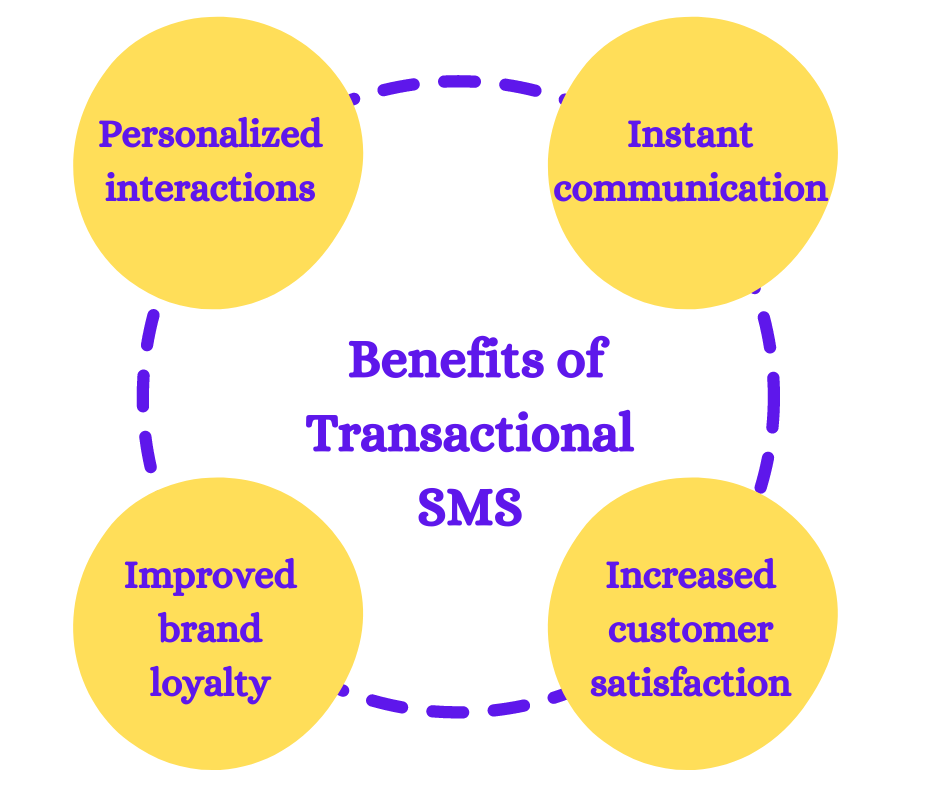
3. Increased customer satisfaction
Providing timely and relevant information through transactional SMS can lead to higher levels of customer satisfaction and a better overall experience.
4. Improved brand loyalty
Utilizing transactional SMS can help strengthen the bond between your brand and your customers, leading to increased brand loyalty and repeat business.
Best Practices for Using Transactional SMS
When using transactional SMS, it’s important to adhere to best practices to ensure that your messages are well-received by your recipients. Here are some key considerations:
1. Obtaining consent
Always make sure that you have obtained proper consent from your recipients before sending them transactional SMS. This can be done through opt-in processes or by ensuring that recipients have explicitly agreed to receive such messages.
2. Providing relevant information
Transactional SMS should contain relevant and useful information for the recipient. Whether it’s order confirmations, appointment reminders, or account notifications, the content of the message should directly relate to the recipient’s transaction or interaction with your business.
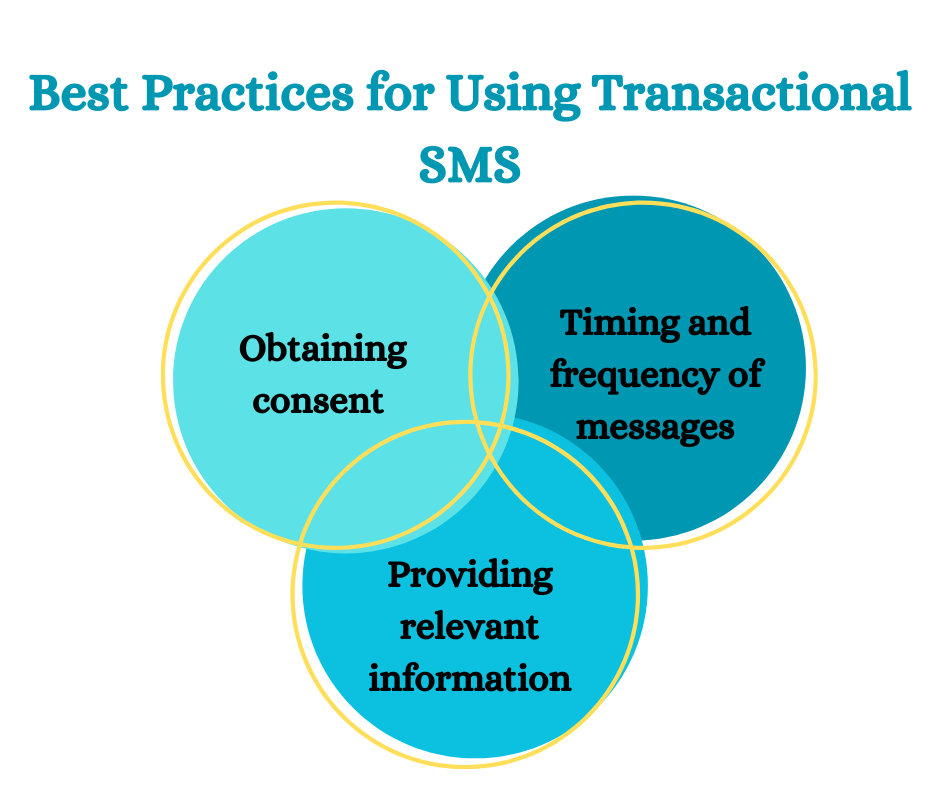
3. Timing and frequency of messages
Be mindful of the timing and frequency of your transactional SMS. Sending messages at inappropriate times or bombarding recipients with excessive messages can be off-putting.
Consider the recipient’s time zone and the nature of the transaction when determining the timing of your messages. Additionally, avoid sending too many messages in a short period.
By following these best practices, you can ensure that your transactional SMS is well-targeted, relevant, and respectful of your recipients’ preferences.
Using Transactional SMS To Drive Business Growth
Transactional SMS can be a powerful tool for driving business growth in several ways. You can use all the creativity to make transactional SMS an engaging one.
1. Cross-selling and upselling opportunities
By sending targeted transactional SMS messages to customers, businesses can effectively promote related products or services, increasing the likelihood of additional sales.
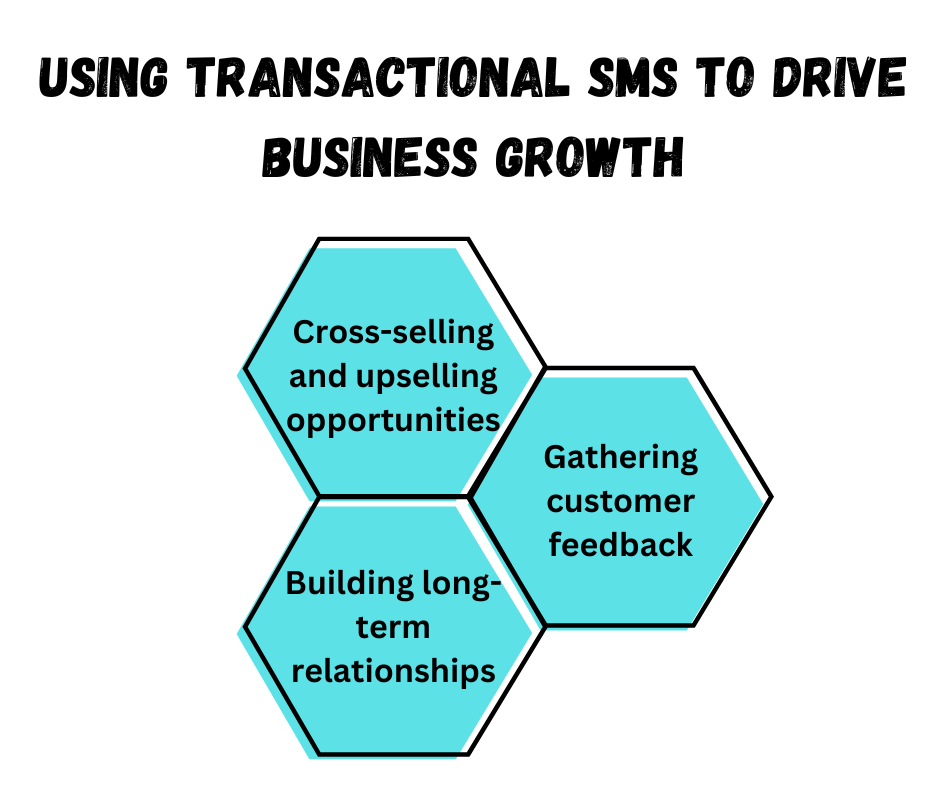
2. Gathering customer feedback
Transactional SMS can be used to solicit and gather valuable feedback from customers about their experiences with a product or service. This feedback can then be used to make improvements and better serve customers in the future.
3. Building long-term relationships
Utilizing transactional SMS to communicate with customers in a personalized and timely manner can help businesses build and maintain long-term relationships with their customer base, leading to increased loyalty and repeat business.
Frequently asked questions
What is the difference between transactional and promotional SMS?
Transactional or service SMS share information the customer needs, such as OTPs, order updates and payment alerts. Promotional SMS carry offers and ads. Transactional SMS reach DND numbers at any time, while promotional SMS do not. Compare the SMS types.
Can I add an offer to a transactional SMS?
No. A transactional or service implicit template must carry only information about the transaction. Adding offers or ads breaks DLT rules and can get the template rejected or the sender penalised, so send offers on a promotional template.
What are examples of transactional SMS?
OTPs, order confirmations, shipping and delivery updates, payment receipts, bank debit and credit alerts, appointment confirmations and booking details. Each one is triggered by something the customer did. See transactional SMS examples.
How do I send transactional SMS automatically?
Connect your website, app or billing software to an SMS API, so an SMS goes out when an order is placed or a payment is received. Plugins for Shopify, WooCommerce and Tally do this without coding. See how to send DLT SMS by API.
Can transactional SMS be sent at night?
Yes. Service implicit (transactional) templates are not limited to daytime hours, so OTPs and alerts reach customers at any time. Only promotional SMS are held at night until the next morning.
Which DLT template type should I choose for transactional SMS?
Choose Service Implicit for messages linked to the customer’s own transaction, such as OTPs, orders and payments. Use Promotional for offers. Picking the wrong type is a common reason for template rejection. See the DLT template types.