SMS marketing involves sending promotional campaigns or transactional messages for marketing purposes using text messages.

The growing popularity of SMS marketing can be attributed to its high open and response rates, cost-effectiveness, and the widespread use of mobile phones.
Additionally, SMS marketing allows for personalized communication and can be easily integrated with other marketing channels.
Pros of SMS Marketing
In the era of marketing, SMS marketing offers numerous compelling advantages. They are firstly, establishing a strong bond and communication with the audience, making it an ideal platform for engaging and interacting with customers on a more individual level.
From a business perspective, SMS marketing is highly cost-effective compared to other traditional advertising channels. This makes it an attractive option for businesses looking to reach their audience cost-efficiently.
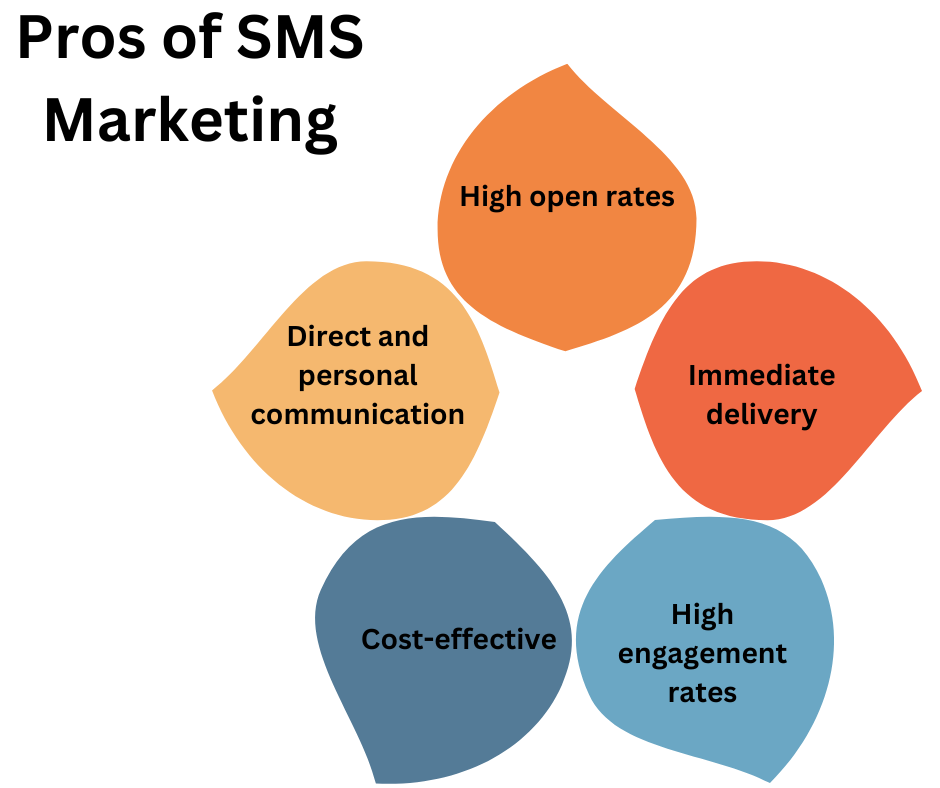
Lastly, SMS marketing has been consistently shown to yield high engagement rates. This makes it a powerful tool for businesses to interact with their target audience and drive meaningful interactions.
Consequently, SMS marketing stands out as a versatile and impactful marketing approach for businesses looking to connect with their audience directly and effectively.
Cons of SMS Marketing
When it comes to SMS marketing, there are several considerations to keep in mind. These include:
Permission requirements
SMS marketing requires obtaining explicit permission from recipients before sending them marketing messages. This can be a challenge as obtaining consent in compliance with regulations is essential.
Message length limitations
SMS messages are limited in length, typically to 160 characters. This restriction can make it challenging to convey a comprehensive message or convey detailed information.
Potential for spam complaints
Since SMS messages directly reach recipients’ phones, there is a risk of recipients perceiving them as spam. This can lead to complaints and negatively impact the reputation of the business.
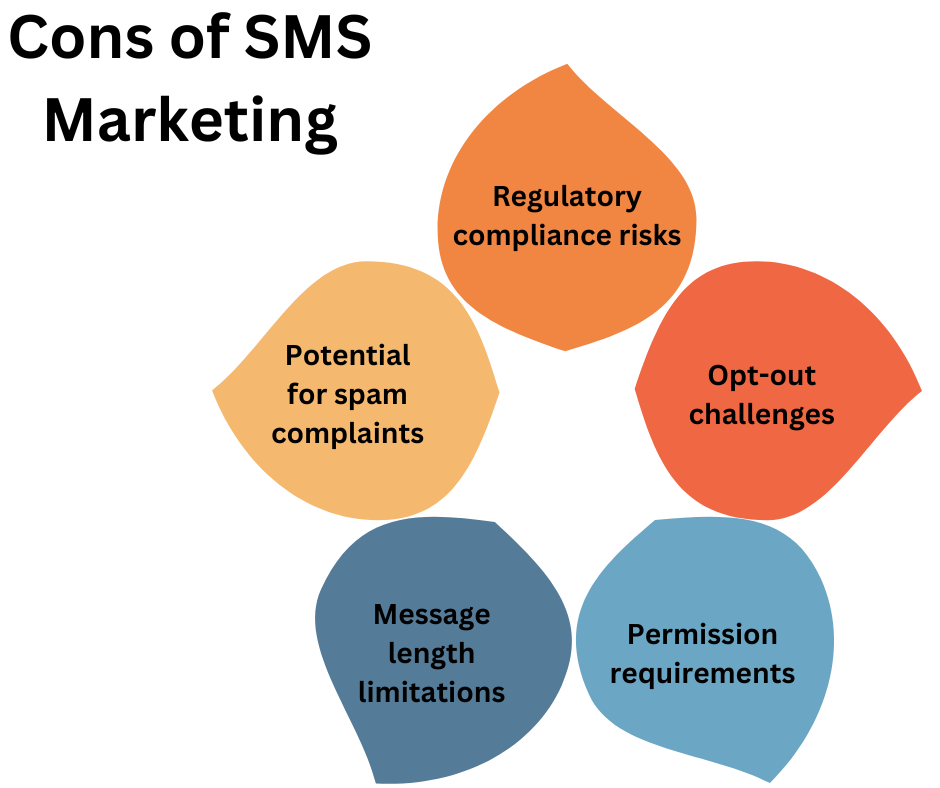
Opt-out challenges
Providing a seamless opt-out mechanism is crucial for SMS marketing, as recipients must be able to easily unsubscribe from receiving further messages. Managing opt-outs effectively can be a logistical challenge for businesses.
Regulatory compliance risks
SMS marketing is subject to various regulations, such as the TRAI in India. Non-compliance with these regulations can lead to legal repercussions and financial penalties.
Best Practices for SMS Marketing
With the knowledge of the pros and cons of SMS marketing the next step is to understand how can you enhance your SMS campaign. The following are the best practices for SMS marketing:
Obtaining consent
Before sending any marketing messages, it’s essential to obtain explicit consent from the recipients. This can be done through opt-in forms, checkboxes, or other consent-gathering methods. It’s important to keep a record of consent for compliance purposes.
Providing value in messages
SMS marketing messages should provide clear and immediate value to the recipients. Whether it’s a special offer, important information, or exclusive content, the messages should enhance the recipient’s experience rather than being seen as spam.
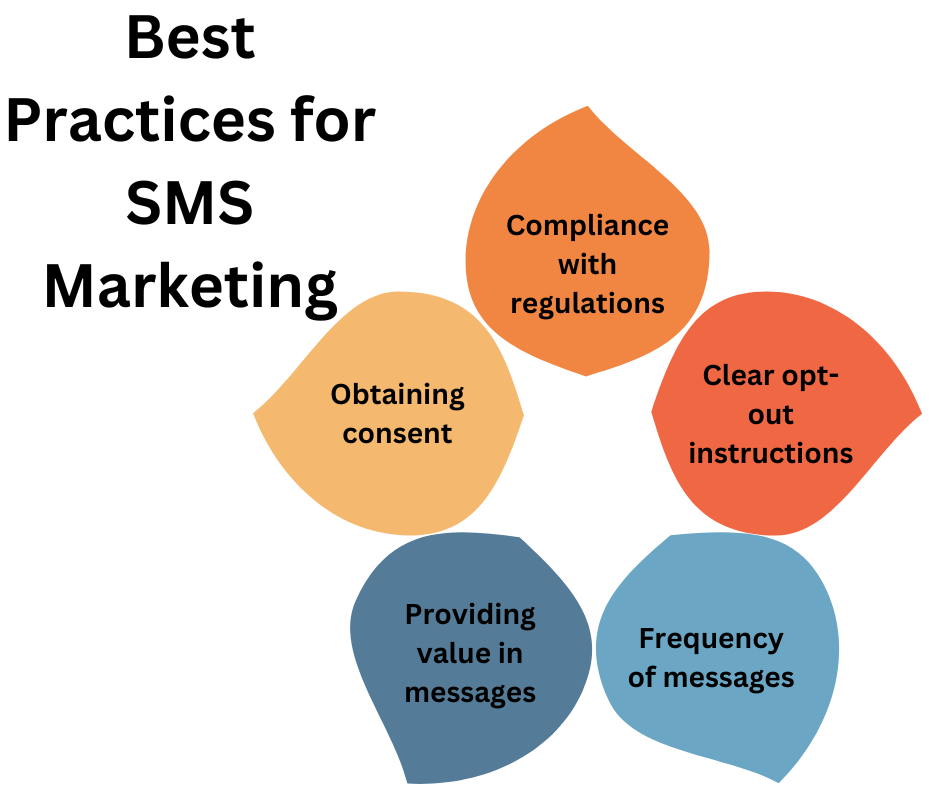
Frequency of messages
It’s crucial to find the right balance in the frequency of messages. Sending messages too often can lead to recipient fatigue and opt-outs while sending them too infrequently might result in a lack of engagement.
Testing and monitoring the response to different frequencies can help determine the optimal approach.
Clear opt-out instructions
Every SMS marketing message should include clear and easily accessible opt-out instructions.
This can be in the form of a simple reply with a specific keyword or a link to manage preferences. Respecting opt-out requests is not only a best practice but also a legal requirement.
Compliance with regulations
SMS marketers must adhere to all relevant regulations and laws, such as the TRAI in India.
This includes obtaining consent, providing clear disclosures, and honoring opt-out requests. Staying informed about the latest regulatory requirements is essential for maintaining compliance.
Frequently asked questions
Is SMS marketing still worth it in India?
Yes. SMS reaches every mobile phone, works without internet and is read quickly, so it suits offers, reminders and alerts. Many businesses now use SMS together with WhatsApp for the best reach.
What is the biggest drawback of SMS marketing in India?
The setup and rules. You need DLT registration, approved headers and templates, and promotional SMS do not reach DND numbers. SMS is also plain text, with no images or buttons.
Can SMS marketing messages include images?
No. SMS carries only text, so you can add a link to an image or page. For images, cards and buttons inside the message, use RCS or WhatsApp. See RCS vs traditional SMS.
Is SMS marketing cheaper than WhatsApp marketing?
Per message, SMS is usually cheaper than a WhatsApp marketing message, but WhatsApp can show media and buttons. Compare current rates on the WhatsApp pricing page and the bulk SMS pricing page.
How do I let customers opt out of promotional SMS?
Add a clear opt-out line in every promotional template, as TRAI’s 2025 amendment requires, and remove people who opt out from your list. Customers can also block promotions through DND by calling or sending an SMS to 1909.
Are there time limits for sending marketing SMS in India?
Yes. Promotional SMS can go only during TRAI’s allowed daytime hours. Messages sent at night are held and delivered the next morning. Transactional and service messages have no such limit.