
The most cost-effective and convenient method of communication and advertising, bulk SMS, is gaining popularity with the rise of digitalization.
As businesses embrace this approach, ensuring data security has become a top priority. Advancements in technology have made data security more accessible than ever before.

Why Data Security Matters In Bulk SMS?
Data security plays a crucial role in the world of Bulk SMS messaging. It is essential for establishing credibility and trust among your audience.
When collecting personal data such as phone numbers, names, and email IDs, it’s important to recognize the significance of safeguarding this information.
While it might seem like just contact information, any compromise of this data could result in substantial loss. Unauthorized data breaches can lead to legal consequences and reputational risks for your business.
Furthermore, maintaining a strong brand reputation is vital, and data security is a cornerstone of this. Any mishandling of personal data can have serious implications for how your business is perceived.
Lastly, compliance with rules and regulations is important. Organizations must adhere to strict guidelines set by authorities such as TRAI to ensure the privacy of their audience. Failure to comply with these regulations can lead to severe consequences.
Common Data Security Threats In Bulk SMS
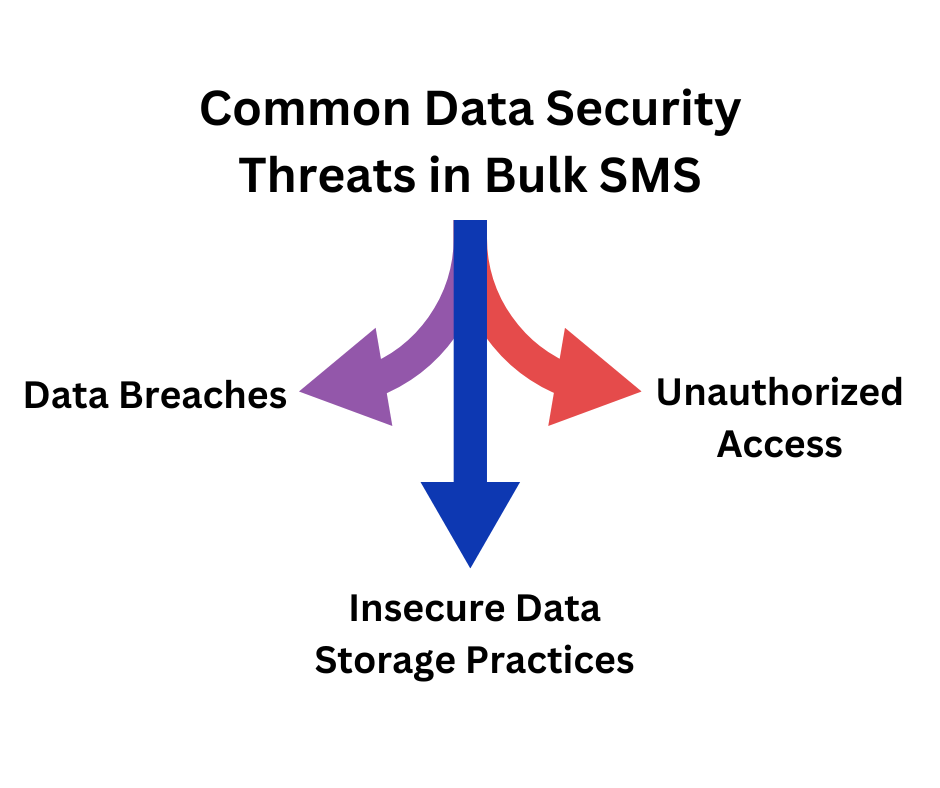
As we delve into the importance of data security in the context of bulk SMS, it’s essential to understand the various threats that can compromise the integrity of such data.
Unauthorized Access
Unauthorized access to bulk SMS platforms and customer data can be facilitated by various methods. Hackers may employ phishing attacks, attempting to deceive users into providing sensitive information such as login credentials.
Additionally, malware can be utilized to gain unauthorized access, allowing cybercriminals to compromise the security of the platform and access customer data.
Data Breaches
Data breaches refer to the unauthorized access or release of secure information. In the context of bulk SMS, data breaches can have a detrimental impact on customer data, potentially leading to the exposure of personal information and contact details.
Data breaches in bulk SMS can occur through various means, such as exploitation of vulnerabilities in the platform’s security, unauthorized access to databases, or interception of information during transmission.
Insecure Data Storage Practices
Weak data storage practices and inadequate security measures can pose significant risks to the security of bulk SMS data. Insecure data storage may lead to unauthorized access to sensitive information, potentially resulting in data leaks and breaches.
Proper encryption, access controls, and secure storage protocols are essential to mitigate these risks and ensure the confidentiality and integrity of customer data.
Best Practices For Ensuring Data Security In Bulk SMS
As we now know what are the possible threats, the following are the best practices that can help you protect your bulk SMS campaigns.
Choosing a Reputable Bulk SMS Provider
It is crucial to carefully select a bulk SMS provider with a strong emphasis on data security. Look for a provider that offers robust security infrastructure, including features such as data encryption and secure login protocols.
Ensure that the provider complies with industry-standard security practices to safeguard your data and communications.
Implementing Strong Data Security Measures
When it comes to data security, implementing robust measures is paramount. Data encryption should be employed not only for the messages being sent but also for the databases storing sensitive information.
Additionally, consider the implementation of two-factor authentication to enhance access control, requiring a second form of verification in addition to the standard username and password.
Regular security updates and vulnerability patching should be performed to stay ahead of evolving threats and protect the integrity of the system.
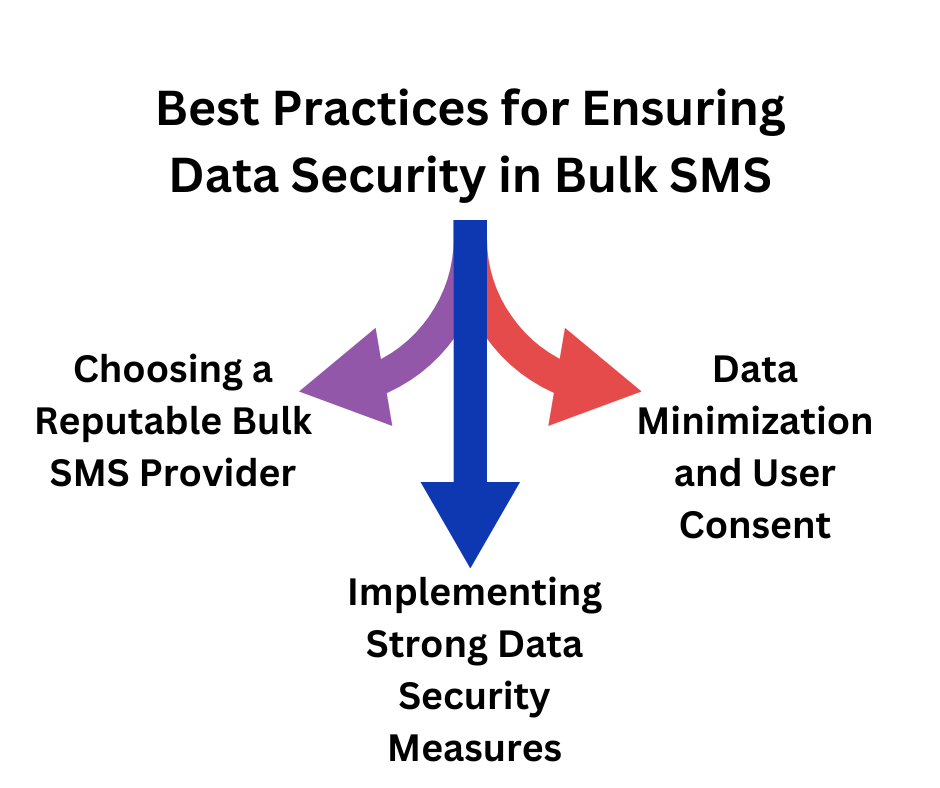
Data Minimization and User Consent
In the realm of data security, the principle of data minimization is fundamental. Collect only the necessary data and avoid unnecessary accumulation of sensitive information.
It is imperative to obtain explicit and informed consent from users before sending bulk SMS messages.
Furthermore, offering clear and easily accessible opt-out options for recipients is essential to ensure compliance with privacy regulations and respect for user preferences.
Frequently asked questions
Is it safe to upload my customer list to a bulk SMS platform?
It is safe with a provider that protects data with secure login, access controls and encrypted connections. Upload only the numbers and fields you need, and delete old lists you no longer use. See Fast2SMS data security details.
How do I secure my bulk SMS account?
Use a strong password, turn on two-factor login and log out of devices you no longer use. For the API, keep your key secret and allow requests only from your own server IPs. See how to turn on two-factor login.
What should I do if my SMS API key is leaked?
Regenerate the API key at once so the old one stops working, and turn on IP whitelisting so only your servers can use the new one. Then check your reports and transactions for messages you did not send. See how to whitelist API IPs.
Which Indian law covers customer data used for SMS?
The Digital Personal Data Protection Act, 2023 covers personal data such as names and phone numbers. Collect data with consent for a clear purpose, keep only what you need and let people withdraw consent. TRAI rules also apply to commercial SMS.
How should I send OTPs securely?
Use a proper OTP service, not a marketing campaign. Smart OTP sends codes on a priority route with a WhatsApp backup, limits retries and checks the code for you, so your app never has to store it in plain text. See how Smart OTP works.