Lifecycle SMS marketing involves strategically timed and targeted text message campaigns that cater to customers at various stages of the customer lifecycle, including acquisition, engagement, conversion, retention, and reactivation.

Lifecycle SMS marketing is crucial in today’s marketing landscape as it allows businesses to engage with their customers in a personalized and timely manner, leading to increased customer satisfaction, brand loyalty, and ultimately, higher conversion rates.
Using SMS marketing with the creativity of Lifecycle marketing can do wonders for the business. the following article will unfold every concept of Lifecycle SMS marketing.
Stages of Lifecycle SMS Marketing
The first step for an effective marketing strategy is understanding how and when to send text SMS. In this section, we will discuss the stages of the lifecycle of SMS marketing.
Acquisition
The first step is knowing your audience preparing a list and getting the concern. The first step is building a subscriber list, which can be done through various methods such as online sign-up forms, in-store sign-ups, or other marketing channels.
The second step is the opt-in process via SMS, where subscribers consent to receive marketing messages by texting a keyword or confirming their subscription through a link.
Engagement
To effectively engage with our audience, it’s important to focus on sending relevant and engaging content through SMS. Personalization and segmentation are key strategies for achieving this.
By sending personalized SMS messages to segmented audiences, we can increase credibility and build stronger connections with our contacts.
This approach ensures that our messaging is tailored to the specific interests and needs of each audience segment, ultimately leading to more meaningful and impactful communication.
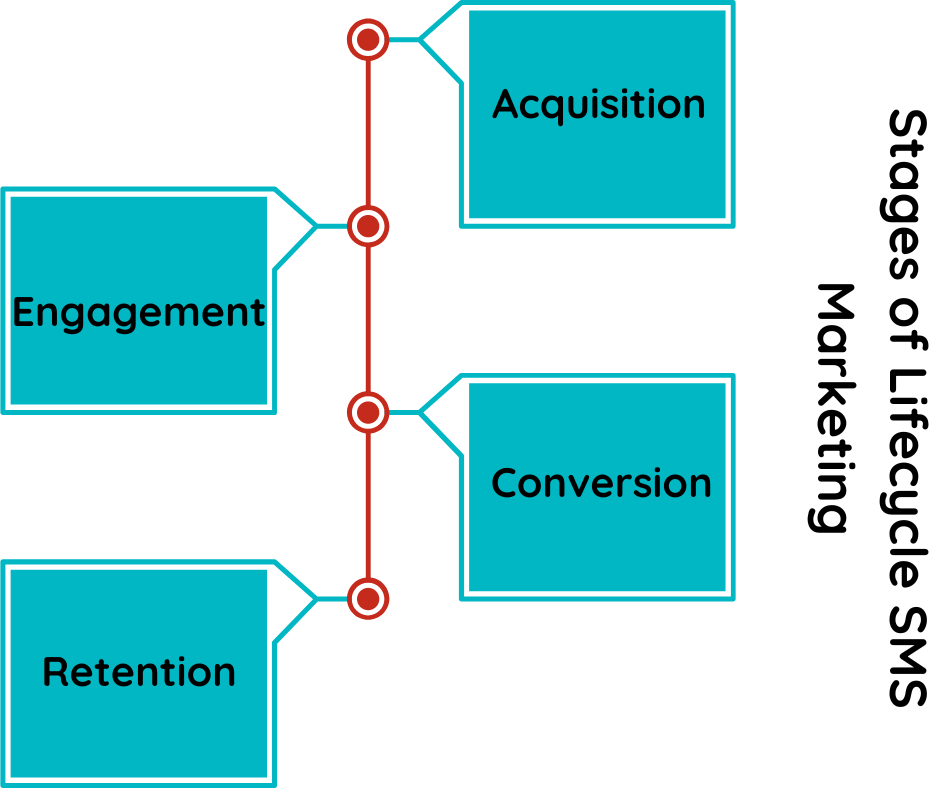
Conversion
When it comes to conversion, implementing promotions and offers via SMS is a strategy that you should be utilizing. It’s one of the most effective methods for encouraging customer engagement and driving sales.
Additionally, incorporating strong call-to-action strategies within your communications can further enhance the impact of your marketing efforts.
Retention
Retaining customers via SMS can be effectively achieved by implementing customer support and keeping them engaged with your bulk SMS campaigns.
Providing exceptional customer service and support through SMS, addressing any inquiries or issues promptly and courteously.
Implementing loyalty programs and rewards that are communicated and delivered to customers via SMS, offering incentives for continued patronage and engagement.
Best Practices for Lifecycle SMS Marketing
Just sending an SMS from time to time is not enough. The following are the best practices you must follow to have a successful and effective bulk SMS campaign.
Compliance with regulations
Ensure that your SMS marketing campaigns comply with all relevant regulations. Obtain proper consent from recipients before sending marketing messages.
Timing and frequency of messages
Be mindful of the timing and frequency of your SMS messages. Avoid bombarding recipients with excessive messages, and consider factors such as time zones and the nature of your audience when scheduling message delivery.
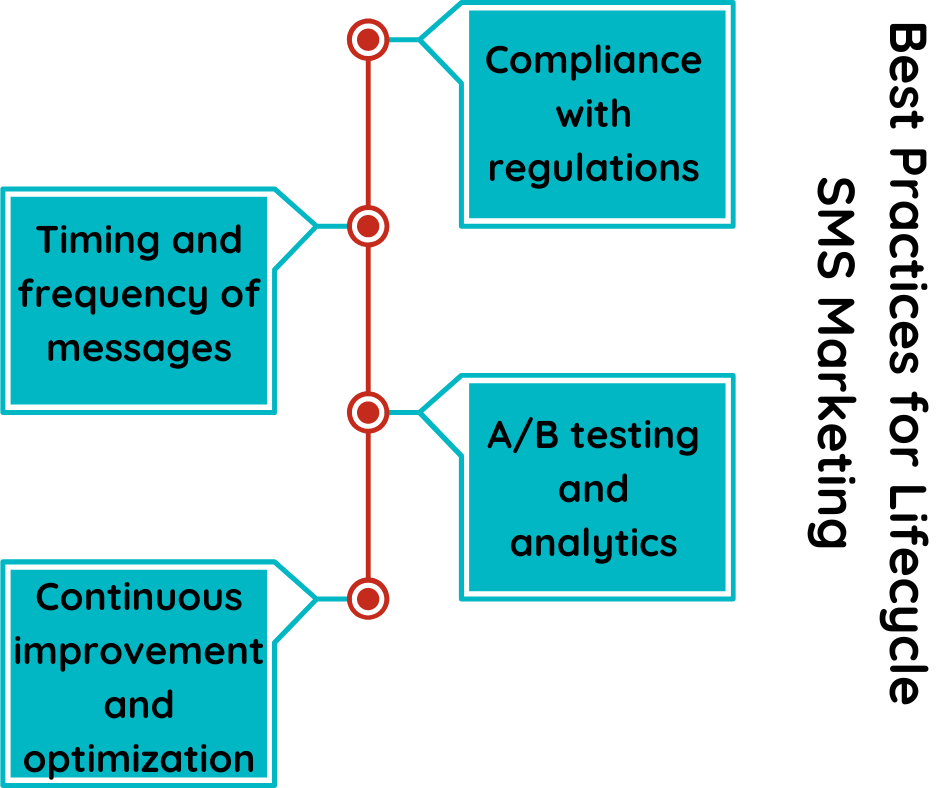
A/B testing and analytics
Utilize A/B testing to compare the performance of different message variations and use analytics to track important metrics such as open rates, click-through rates, and conversion rates. This data can help you refine your SMS marketing strategy for better results.
Continuous improvement and optimization
Regularly review the performance of your SMS marketing campaigns and look for opportunities to optimize.
This may involve refining your messaging, updating your target audience segments, or incorporating new technologies to enhance the effectiveness of your SMS marketing efforts.
Frequently asked questions
What is an example of lifecycle SMS marketing?
A shop sends a welcome SMS when someone signs up, an order update after purchase, a review request a week later and a win-back offer if the customer has not bought in 60 days. Each message is tied to where the customer is, not to a fixed calendar.
How is lifecycle SMS different from a one-time SMS blast?
A blast sends the same message to everyone at once. Lifecycle SMS sends different messages to each customer based on what they did, such as signing up, buying or going quiet, so every message is more relevant.
How do I automate lifecycle SMS?
Connect your store, CRM or app to an SMS API so a message goes out when an event happens, such as a new sign-up or an order. Each message uses an approved DLT template with variables like the customer name. See the DLT SMS API guide.
Which lifecycle messages need a promotional DLT template?
Welcome offers, win-back discounts and sale alerts are promotional. Order confirmations, delivery updates and payment reminders are transactional. Register each on the right template type, because promotional SMS do not reach DND numbers.
How often should I send lifecycle SMS?
Let the customer’s actions decide. Send transactional updates as they happen, and limit promotional messages to a few a month per customer. If opt-outs or complaints go up, send fewer.
What should I track in lifecycle SMS campaigns?
Track delivery rate, link clicks, conversions and opt-outs for each stage. Comparing stages shows where customers drop off, for example many sign-ups but few first orders.