
Two-factor authentication (2FA) is a security process that requires users to provide two different authentication factors to verify themselves.
These factors can include something the user knows (like a password or PIN), something the user has (like a smartphone or a security token), or something the user is (like a fingerprint or other biometric data).

By requiring two different types of credentials, 2FA adds an extra layer of security, making it more difficult for unauthorized users to access accounts and sensitive information.
Importance Of 2FA In Business Security
Implementing two-factor authentication (2FA) is crucial for enhancing business security. 2FA provides an extra layer of protection beyond just a password, making it significantly more difficult for unauthorized individuals to access sensitive data and systems.
It helps mitigate the risks associated with password theft, phishing attacks, and other forms of cyber threats.
By requiring users to provide two different authentication factors, such as a password and a unique, one-time code sent to their mobile device, 2FA significantly reduces the likelihood of unauthorized access.
This added security measure is essential for protecting valuable business assets and maintaining the trust of customers and partners.
How Will Two-Factor Authentication Help Your Business To Grow?
Two-factor authentication can help your business grow in many aspects. Some of them are as follows:
1. Increased Security
Implementing two-factor authentication (2FA) can significantly enhance security in the following ways:
- Protection against unauthorized access
By requiring users to provide two forms of identification before accessing an account or system, 2FA adds an extra layer of security, making it more difficult for unauthorized individuals to gain access.
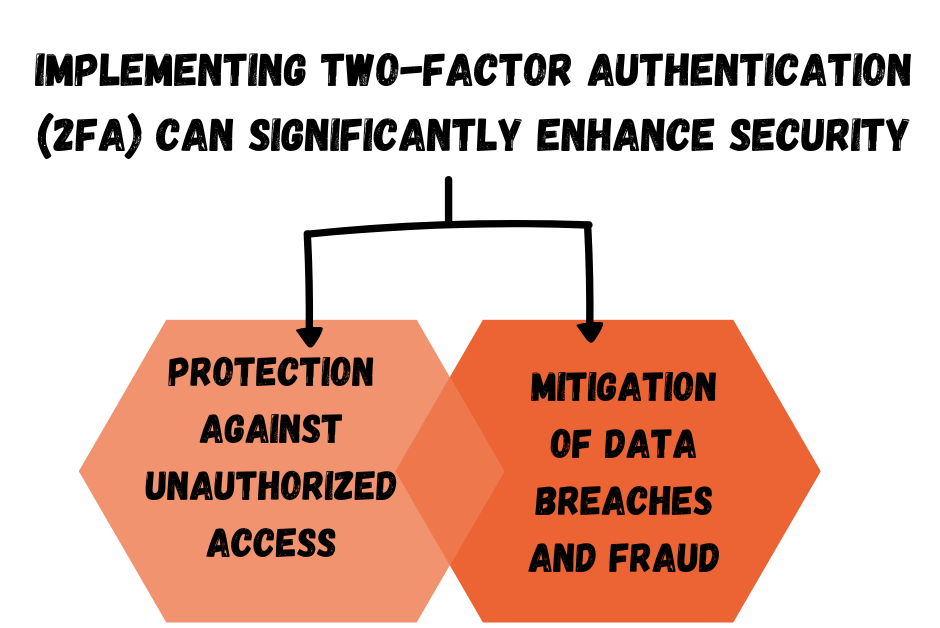
- Mitigation of data breaches and fraud
2FA can help prevent data breaches and fraud by adding barriers that cybercriminals would need to overcome to access sensitive information or carry out fraudulent activities. This extra step can significantly reduce the likelihood of unauthorized access and related risks.
2. Customer Trust and Confidence
Implementing two-factor authentication (2FA) can significantly enhance customer trust and confidence in several ways.
- Assurance of secure transactions
It assures secure transactions, as the additional layer of security reduces the risk of unauthorized access to sensitive information and accounts.
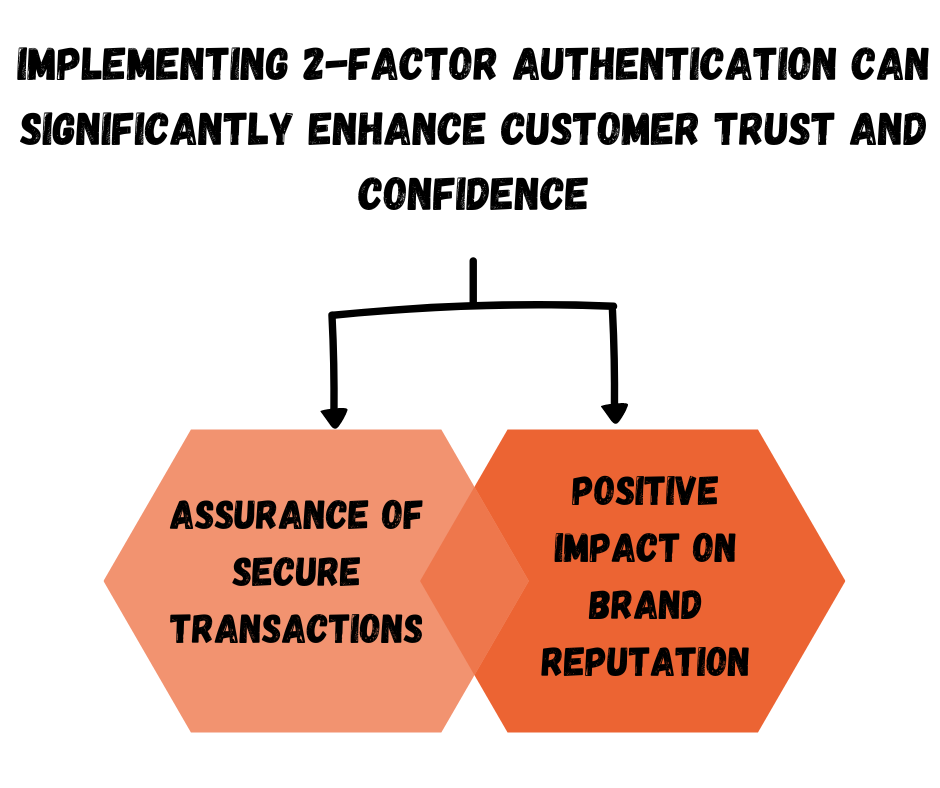
- Positive impact on brand reputation
2FA has a positive impact on brand reputation, as customers appreciate the proactive approach to safeguarding their data, leading to increased trust in the brand and its commitment to security.
3. Compliance with Regulations
Implementing two-factor authentication is beneficial for ensuring compliance with regulations in several ways:
- Meeting industry standards and requirements
It helps in meeting industry standards and requirements by adding an extra layer of security to the authentication process, which is often a requirement in various regulatory frameworks.
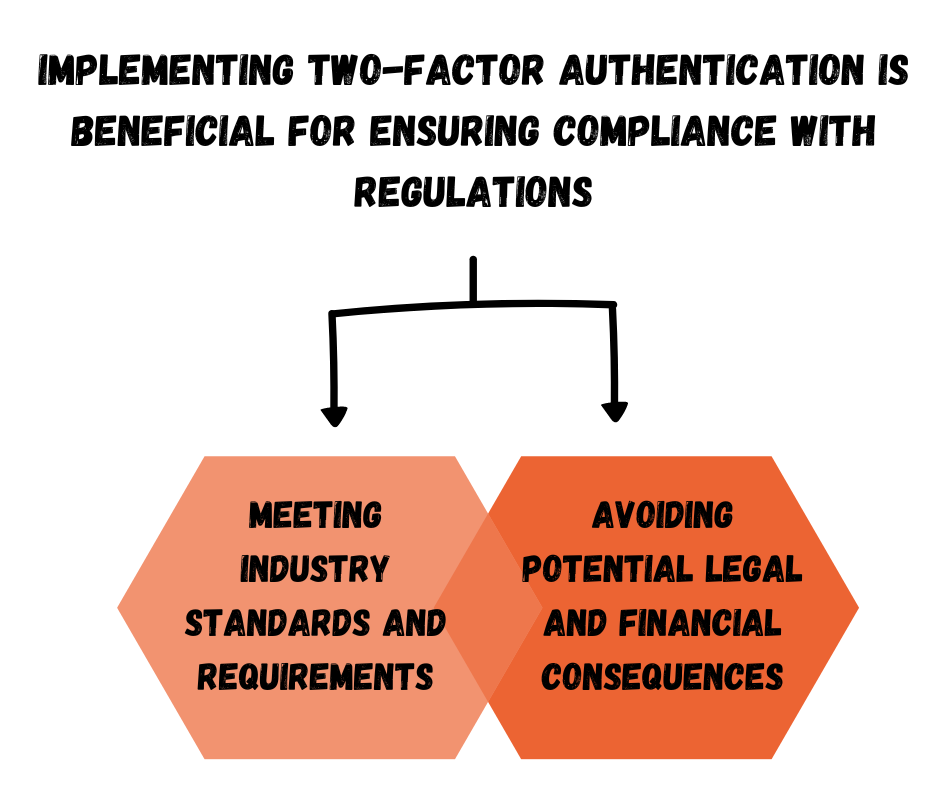
- Avoiding potential legal and financial consequences
Two-factor authentication aids in avoiding potential legal and financial consequences by significantly reducing the risk of unauthorized access to sensitive data and systems, which could lead to non-compliance penalties and financial losses.
4. Scalability and Business Growth
Implementing two-factor authentication not only enhances security but also contributes to the scalability and growth of the business in the following ways:
- Facilitating expansion into new markets
Facilitating expansion into new markets by providing a secure and trustworthy platform for potential customers in different regions.

- Attracting and retaining customers
Attracting and retaining customers by offering an extra layer of protection for their sensitive information, thereby building trust and loyalty.
Exploring the benefits of implementing two-factor authentication (2FA) for business growth and long-term success can yield significant advantages.
By incorporating 2FA, businesses can enhance security measures, build trust with customers, and safeguard sensitive information.
Additionally, the implementation of 2FA can position a business as proactive and security-conscious, encouraging long-term success and growth.
Frequently asked questions
Is SMS OTP a good second factor for a small business?
Yes, for most small businesses. It needs no extra app, works on every phone and customers already know it. For very sensitive accounts you can also offer an authenticator app. See SMS OTP vs authenticator app.
Does two-factor authentication slow down login?
Only a little. Users wait a few seconds for the code, and OTP autofill on Android and iPhone can fill it in for them. You can also ask for an OTP only on new devices or risky actions.
What is the difference between 2FA and OTP?
2FA is the method: checking two different factors, such as a password and a phone. An OTP is one common way to do the second check, using a one-time code sent by SMS, WhatsApp or an app.
Does RBI require two-factor authentication for online payments?
For most digital payments, yes. RBI requires an additional factor of authentication, and SMS OTP is the most common one, though newer rules also allow other factors. See RBI authentication rules for SMS OTP.
Can I send 2FA codes on WhatsApp instead of SMS?
Yes. With Smart OTP you can send the code on WhatsApp using an approved authentication template and add SMS as a fallback if the WhatsApp message fails. Compare both in WhatsApp OTP vs SMS OTP.
How can I add OTP login to my website with Fast2SMS?
Use Smart OTP. Create an OTP template in the panel, call the send API when the user enters a mobile number, and call the verify API when they enter the code. See the Smart OTP setup guide.